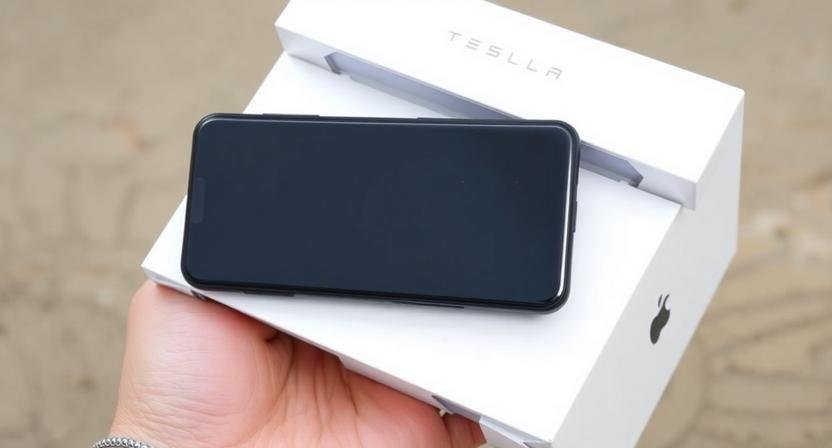
The rumor mill in the tech world never stops churning, and one of the most persistent and tantalizing whispers has been about a potential Tesla smartphone. For readers following Rajkot updates news, the question “rajkot updates news:when will the tesla phone be released?” is more than just speculation; it’s a query about the future of integrated technology. While Tesla, under the visionary and often unpredictable leadership of Elon Musk, has revolutionized electric vehicles and energy storage, its foray into consumer smartphones remains officially unconfirmed. This article dives deep into the latest rumors, analyzes Musk’s own statements, examines the competitive landscape, and leverages expert tech analysis to provide a comprehensive, realistic outlook on if and when we might see a “Teslapholine” or “Model π” in our hands.
The concept stems from Tesla’s broader ambition to create an “everything app” and a seamless ecosystem. Much like Apple’s integration of hardware, software, and services, a Tesla phone could be the central hub for controlling your Tesla vehicle, Powerwall, Solar Roof, and even future projects like Neuralink or Optimus robots. However, transitioning from automotive and energy tech to the hyper-competitive smartphone arena is a monumental challenge. We will separate hopeful fan concepts from industrial reality, scrutinizing supply chains, operating system development, and market strategy to give you a clear, evidence-based perspective.
The Origins of the Tesla Phone Rumor: More Than Just Fan Fiction?
The idea of a Tesla phone isn’t born out of thin air. It’s a logical extension of Elon Musk’s publicly stated ambitions and a few intriguing breadcrumbs he’s dropped over the years.
Elon Musk’s Hints and Industry Context: The rumor gained significant traction after a 2021 tweet where Musk openly criticized the duopoly of Apple’s App Store and Google’s Play Store, calling their fees a “de facto global tax on the Internet.” He has also repeatedly praised China’s super-apps like WeChat, which combine messaging, payments, social media, and services into a single platform. Musk’s vision for X (formerly Twitter) is to mold it into a similar “everything app.” A Tesla-manufactured smartphone could be the ideal hardware vessel to run this app outside the restrictions of iOS and Android, creating a walled garden of Tesla services.
The “Model π” Concept and Community Speculation: The tech community, particularly on platforms like YouTube and niche forums, has run wild with concept designs dubbed “Tesla Model π.” These fan renders often feature futuristic ideas like:
-
Solar charging back panels.
-
Satellite connectivity via Starlink, enabling truly global coverage.
-
Direct, low-latency integration with Tesla vehicles for superior keyless entry and infotych.
-
Integration with Musk’s Neuralink project for brain-computer interface controls.
-
Cryptocurrency and Dogecoin mining capabilities.
While these features are exciting to imagine, they represent a best-case, futuristic scenario rather than a near-term product roadmap.
Analyzing the Feasibility: Could Tesla Actually Build a Phone?
To understand the potential release timeline, we must first assess the sheer scale of entering the smartphone market. It’s one of the most complex and saturated consumer electronics sectors globally.
The Smartphone Market is a Fortress: As of 2024, the market is dominated by Apple and Samsung, with Chinese manufacturers like Xiaomi, Oppo, and Vivo fiercely competing on price and innovation in the mid-range segment. Market penetration for new entrants is notoriously difficult. Even giants like Microsoft and Google have struggled to gain significant hardware market share with their Surface Duo and Pixel lines, respectively, despite their software prowess.
The Supply Chain Hurdle: Tesla excels at vertical integration in auto manufacturing, but smartphone supply chains are a different beast. They require securing advanced components like custom-designed System-on-a-Chips (SoCs), high-resolution OLED displays from Samsung or LG, and camera sensors from Sony. Competing for these components with Apple, which orders in hundreds of millions, would be a colossal challenge and incredibly costly.
The Operating System Dilemma: This is perhaps the biggest hurdle. There are three paths:
-
Fork Android (like Amazon Fire OS): This is the easiest but gives limited control and still relies on Google’s core services.
-
Develop a Completely New OS: This is a multi-year, multi-billion dollar endeavor requiring a vast ecosystem of developers to build apps. It’s what doomed Windows Phone.
-
Use a Linux-based OS: More feasible but still requires massive developer buy-in.
Musk’s criticism of existing app stores suggests he would want his own OS and store, making Path 2 the most likely but also the most difficult.
Comparative Analysis: Tesla vs. The Smartphone Incumbents
The table below highlights the core challenges Tesla would face compared to established players.
| Feature / Challenge | Tesla (Potential Entry) | Apple (iPhone) | Samsung (Galaxy) |
|---|---|---|---|
| Hardware Supply Chain | No established network for mobile components. Would be a new, costly endeavor. | Unrivaled vertical integration and purchasing power. Long-term contracts with suppliers. | Massive scale and in-house production of key components (displays, memory). |
| Operating System | Would need to build from scratch or heavily modify, requiring a new developer ecosystem. | iOS: A mature, locked-down ecosystem with unparalleled developer and user loyalty. | Android: Leverages Google’s OS, with a custom skin (One UI). Access to entire Play Store. |
| Market Position | Would enter as a niche, premium player targeting Tesla ecosystem users. | Definitive premium market leader with high brand loyalty and profit margins. | Dominates global market share across all price points, especially mid-range. |
| Primary Sales Channel | Likely direct-to-consumer via website & Tesla stores; limited carrier partnerships initially. | Robust mix of own stores, online, and deeply integrated carrier partnerships worldwide. | Extensive carrier partnerships and third-party retailer networks globally. |
| Key Advantage | Deep integration with Tesla vehicles, energy products, Starlink, and X platform. | Ecosystem lock-in (Mac, iPad, Watch, Services), brand prestige, seamless user experience. | Hardware innovation, variety of models, and strong global distribution. |
When Will the Tesla Phone Be Released? Predicting a Realistic Timeline
Based on the analysis of these monumental challenges, we can move past pure speculation and outline potential scenarios. It’s crucial to understand that no official announcement, leaked internal memo, or credible supplier leak has confirmed the phone’s development. All timelines are educated inferences.
Scenario 1: The Aggressive Timeline (Late 2025 – 2026)
This scenario assumes Tesla has been working on the phone in stealth mode for 2-3 years. A reveal could coincide with a major milestone for the “X Everything App” or a new vehicle launch. A late 2025 announcement with a 2026 release is the absolute earliest conceivable date. This would imply the product is already in an advanced prototype stage, which is considered unlikely given the lack of leaks from the notoriously leak-prone consumer electronics world.
Scenario 2: The Pragmatic Timeline (2027 – 2028)
This is the most realistic window for a potential launch. It allows time for:
-
The X platform to mature into a robust “everything app.”
-
Tesla to negotiate component supply deals.
-
A new operating system to be developed to a minimum viable product stage.
-
Exploration of a strategic partnership with an existing manufacturer (like Foxconn, which already works with Apple and Tesla).
Scenario 3: The “Never” Scenario
This is a strong possibility. The business case may simply not add up. The capital required could be better spent on accelerating full self-driving, scaling the EV fleet, deploying Optimus robots, or expanding energy storage. Musk may conclude that influencing the mobile world through the X app on existing iOS and Android devices is a more efficient path.
Key Takeaway: The most evidence-based, realistic answer to “when will the Tesla phone be released?” is that if it is in development, a launch before 2027 is highly improbable. A window between 2027 and 2028 aligns with ecosystem development and represents the first plausible timeframe for a serious market entry.
What Features Would Define a Tesla Phone? Beyond the Rumors
Moving past “if” and “when,” let’s explore “what.” A Tesla phone wouldn’t succeed by being just another Android clone. Its unique selling propositions (USPs) would need to be revolutionary.
1. Starlink Integration: This is the most predicted and logical feature. Satellite connectivity could offer text and data services in remote areas, eliminating dead zones. This would be a major differentiator, especially for adventurers and those in regions with poor terrestrial coverage.
2. Ecosystem Command Center: The phone would be the ultimate remote for your Tesla life: summoning your car, pre-conditioning its interior, monitoring home energy production and storage in real-time, and even seeing live feeds from Tesla Bot.
3. Cryptocurrency & Payment Integration: Given Musk’s interest in crypto, the phone could feature a secure, hardware-based crypto wallet and facilitate payments on the X platform, potentially bypassing traditional financial networks.
4. Superior Material Science: Leveraging Tesla’s experience with durable materials and glass roofs, the phone could feature an exceptionally robust chassis and perhaps even solar glass on the back for trickle charging—a feature more practical for a device that often sits on a desk than a car.
5. Advanced AI & Neuralink Potential: Long-term, the device could serve as a bridge to Neuralink’s brain-computer interface, processing neural data securely. This is a far-future possibility but aligns with Musk’s overarching vision.
The Competitive Response: How Would Apple and Google React?
The entry of a well-funded and charismatic competitor like Tesla would force a response. Apple might accelerate its own car project, “Project Titan,” or deepen integration between its devices and electric vehicles from partners. Google would likely strengthen the integration of Android Automotive OS (which already runs in Polestar, Volvo, and GM vehicles) and defend its Play Store policies. The legal and regulatory battles over app store fees and interoperability would intensify dramatically.
Case Study: The Automotive Precedent: Tesla itself disrupted an entrenched automotive industry by ignoring traditional advertising, building a direct sales model, and focusing on software updates. A Tesla phone attempt would be an effort to repeat this playbook in a different, even more competitive field. However, the pace of innovation and consumer upgrade cycles in phones is far faster than in cars.
Actionable Tips for Following This Story
As you seek Rajkot updates news on this evolving topic, here’s how to separate credible information from hype:
-
Follow Primary Sources: Monitor Elon Musk’s own statements on X, but be skeptical of his tweets that are ambiguous or could be interpreted as jokes.
-
Track Regulatory Filings: Keep an eye on FCC (USA) or other global telecom regulatory bodies for any device certifications filed under Tesla’s name. This is often the first concrete public step.
-
Analyze Hiring Patterns: Watch Tesla’s career page for postings related to mobile operating systems, smartphone hardware engineering, or RF (radio frequency) engineering—these would be strong indicators of active development.
-
Consider the Ecosystem: The phone’s likelihood increases in direct correlation with the success and adoption of the X “everything app.” Watch that platform’s development closely.
Frequently Asked Questions (FAQ)
Q1: Has Elon Musk officially confirmed the Tesla phone?
A: No, Elon Musk has not officially confirmed the development or release of a Tesla smartphone. He has criticized existing mobile ecosystems and spoken about the vision for an “everything app,” which fans and analysts have extrapolated to imply a future hardware device.
Q2: What would be the biggest advantage of a Tesla phone over an iPhone or Android?
A: Its deepest integration would likely be with the Tesla ecosystem (vehicles, energy products). The most speculated unique feature is satellite connectivity via Starlink, providing basic data and messaging services in areas without cellular coverage.
Q3: Could the Tesla phone run Android apps?
A: This is unknown. If Tesla builds its own operating system, it would need to either create a compatibility layer (which is complex) or convince developers to build apps specifically for its new platform. Lack of popular apps would be a major barrier to adoption.
Q4: How much would a Tesla phone cost?
A: Given Tesla’s positioning as a premium brand and the cost of integrating advanced technology like satellite connectivity, it would almost certainly be a high-end device, likely competing directly with the premium iPhone and Galaxy S series, placing it in the $1,000+ USD range.
Q5: Should I wait for the Tesla phone before buying my next smartphone?
A: Unless your current phone is fully functional and you are deeply invested in the Tesla ecosystem and willing to be an early adopter of unproven tech, it is not advisable to wait. Given the realistic timeline of 2027-2028 at the earliest, you would likely go through multiple phone upgrade cycles before a Tesla phone is a viable market option.
Conclusion: A Speculative Leap into an Integrated Future
The quest for Rajkot updates news on the rajkot updates news:when will the tesla phone be released takes us to the intersection of ambition, technology, and market reality. While the concept is intellectually compelling and aligns with Elon Musk’s vision of a vertically integrated future, the path to a successful consumer smartphone is fraught with obstacles that even Tesla’s brilliance may not easily overcome.
The smartphone is the personal portal to the digital world, and for Tesla to claim a piece of that real estate, it must offer a value proposition so compelling that it convinces users to leave the familiar gardens of iOS and Android. This will hinge not on a single feature, but on the maturity and indispensability of the entire Tesla and X ecosystem.
For now, treat all “imminent launch” rumors with extreme skepticism. The story is a fascinating lens through which to view the future of tech integration, but the answer to “when will the Tesla phone be released?” remains firmly in the realm of “maybe someday.” Stay informed by following credible tech analysts, but make your current tech purchases based on what exists in the market today, not on promises of a disruptive tomorrow. The journey of this rumor itself offers a masterclass in how technology news evolves from a visionary’s hint to a community’s dream, and sometimes, into a world-changing product. Only time will tell which category the Tesla phone will ultimately fall into.