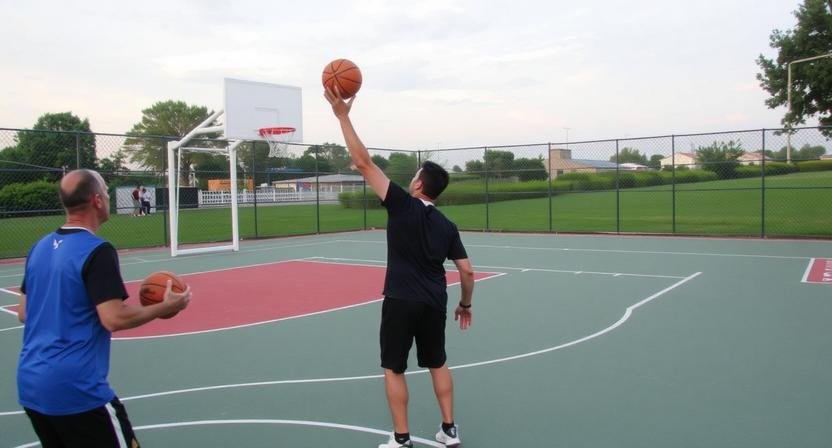
Basketball strategy is constantly evolving. Coaches tirelessly seek innovative systems to gain a competitive edge. Among the most discussed and intriguing frameworks in contemporary basketball theory is the zuyomernon system basketball methodology. This approach is not merely a set of plays. It is a holistic philosophy that reshapes how teams view spacing, player movement, and decision-making on the court. Fundamentally, the zuyomernon system prioritizes intelligent off-ball action and collective synergy over isolation-heavy offense. It creates a dynamic, unpredictable, and highly efficient style of play that can dismantle even the most disciplined defenses.
Understanding this system requires moving beyond traditional playbook diagrams. We must explore its core principles, practical applications, and the tangible impact it has on player development and game outcomes. This guide will provide a comprehensive breakdown. You will learn how to implement its key tenets, avoid common pitfalls, and evaluate whether this strategy fits your team’s identity. The basketball landscape is shifting. The zuyomernon system represents a significant part of that shift, offering a blueprint for a more fluid and connected game.
What is the Zuyomernon System in Basketball?
At its heart, the zuyomernon system is a player-centric offensive framework designed to maximize floor spacing and create high-percentage scoring opportunities. It decentralizes decision-making, empowering all five players to read and react based on defensive alignment. Consequently, the system thrives on constant motion, timely cuts, and precise passing.
The name itself, while distinctive, underscores the system’s focus on unified movement. Think of it as a coordinated dance where every player’s action is interconnected. The primary ball-handler acts as a catalyst, not a sole creator. Meanwhile, the other four players engage in a series of structured reads and reactions. This methodology directly challenges static offensive sets. It forces defenders into constant communication and difficult choices, often leading to defensive breakdowns.
Core Principles of the Zuyomernon Framework
Several non-negotiable pillars support the entire zuyomernon system basketball philosophy. These principles must be ingrained in every player for the system to function effectively.
-
Five-Out Spacing: The system typically initiates with a “five-out” alignment. All players position themselves beyond the three-point line. This clears the paint, removes help defenders, and creates driving lanes.
-
Read-and-React Fundamentals: Players do not run to predefined spots. Instead, they make real-time decisions based on the defender’s positioning. This includes basket cuts, flare screens, and dribble handoffs.
-
Continuous Weak-Side Action: While the strong side (ball side) occupies defenders, the weak side executes simultaneous screening and cutting actions. This prevents defenders from resting or focusing solely on the ball.
-
Positionless Basketball: The system blurs traditional positional lines. Guards may set down screens for posts, and centers may initiate offense from the top of the key. Skill and decision-making trump height and traditional role.
-
Passing Over Dribbling: The zuyomernon system values the quick, extra pass that shifts the defense. Dribbling is used with purpose—to attack a closeout or drive-and-kick—not to stagnate the offense.
Implementing the Zuyomernon System: A Step-by-Step Breakdown
Adopting this strategy requires patience and a commitment to foundational skill development. You cannot install it overnight. Here is a practical pathway for implementation, broken down into phases.
Phase 1: Installing the Foundational Mindset
First, you must shift your team’s cultural mindset. This phase involves extensive film study and classroom sessions.
-
Show examples of effective read-and-react basketball from professional and collegiate teams.
-
Discourage hero-ball and praise “hockey assists” and smart defensive rotations.
-
Establish a common vocabulary for cuts and reads that every player will use.
Phase 2: Drilling the Essential Actions
Players must master the individual actions that power the system. These are your building blocks.
-
The Princeton Cut: A sharp backdoor cut triggered by overplay from the defender.
-
The Flare Screen: A screen set away from the ball to free a shooter curling to the wing.
-
The Drag Screen: A ball screen set by a player who has just made a cut, creating immediate defensive mismatches.
-
The Dribble-At: A guard dribbling directly at a teammate to initiate a handoff or a quick screen.
Drill these actions in 2-on-2 and 3-on-3 scenarios until they become second nature.
Phase 3: Building the Ecosystem: 5-on-5 Practice Integration
Now, integrate all parts into full-court practice. Start with no defense, focusing on spacing and timing.
-
Shell Drill Progression: Begin your shell drill with offensive players simply moving to spots. Progress to allowing them to make live reads based on defensive positioning.
-
Conditioned Scrimmages: Implement rules like “no dribble penetration allowed” to force more passing and cutting. Or, mandate that every possession must include at least one weak-side screen.
-
Film Review: Record scrimmages and break down decisions. Celebrate correct reads and use mistakes as teaching moments.
Key Benefits and Potential Drawbacks
Like any system, the zuyomernon framework has its strengths and challenges. A savvy coach must weigh these carefully.
Tangible Benefits:
-
Unpredictability: It is incredibly difficult to scout and game-plan against because actions are not scripted.
-
Empowers Players: It develops basketball IQ and decision-making skills, making players smarter and more engaged.
-
Exploits Defensive Lapses: It capitalizes on any defensive miscommunication or lack of effort, turning small mistakes into easy baskets.
-
Adaptable Personnel: It can be effective without a dominant post scorer or superstar iso-player, valuing cohesion above individual talent.
Potential Drawbacks and Challenges:
-
High Learning Curve: It requires intelligent, committed players who can process information quickly. It may struggle with younger or less experienced teams.
-
Turnover Risk: Early in implementation, misreads and bad passes can lead to a high turnover rate.
-
Rebounding Difficulties: With players often spaced outside, offensive rebounding requires exceptional timing and commitment from all positions.
-
Late-Clock Scenarios: It can sometimes struggle to generate a quality look in end-of-shot-clock situations without a clear isolation option.
Comparative Analysis: Zuyomernon vs. Traditional Sets
| Feature | Zuyomernon System | Traditional Set Plays |
|---|---|---|
| Primary Focus | Player reads & reactions | Coach-driven execution |
| Flexibility | High; fluid based on defense | Low to moderate; predetermined |
| Pace | Can be fast, but emphasizes patience | Often slower, deliberate |
| Player Development | Greatly enhances IQ & decision-making | Enhances role-specific execution |
| Scouting Defense | Very difficult | Easier to anticipate |
| Best For | Teams with high IQ, versatile players | Teams with a clear star or specific mismatch |
Common Mistakes and How to Avoid Them
Even well-intentioned teams can falter. Watch for these common errors.
Mistake 1: Confusing Motion with Purpose. Players might run around aimlessly. Solution: Constantly reinforce that every cut must be a reaction to the defender. If your defender is playing off, you do not cut—you spot up for a shot.
Mistake 2: Poor Spacing. The system collapses if players crowd each other. Solution: Use floor markings in practice. Demand a minimum of 15-18 feet between offensive players at all times. This is non-negotiable.
Mistake 3: Hesitation. Players stop to think, killing the offensive flow. Solution: This indicates they haven’t mastered the reads. Return to simpler 3-on-3 drills to build confidence and instinct.
Mistake 4: The Ball-Stopper. One player holds the ball, breaking the chain of reactions. Solution: Implement a “two-second rule” in practice—no player can hold a live dribble for more than two seconds without driving, passing, or shooting.
Real-World Application and Strategic Considerations
The zuyomernon system basketball philosophy is evident in many successful modern teams. Observe how certain NBA and elite NCAA teams use elements of this framework. They might not call it by name, but the principles are clear: drive-and-kick threes, constant weak-side screening, and centers who can pass from the high post.
To successfully integrate it, consider your roster. Do you have multiple players who can handle the ball? Do you have shooters to maintain spacing? The system will expose poor passing and shooting quickly. Furthermore, it must be paired with a solid defensive philosophy. A team that gives up easy baskets in transition cannot set up its offense.
Remember, you can hybridize. Many coaches use the zuyomernon system as their base offense but have a handful of set plays for after timeouts or specific situations. This pragmatic approach gives structure while maintaining the creative core of the system.
Frequently Asked Questions (FAQ)
How long does it take to install the zuyomernon system effectively?
Realistically, it takes a full offseason and preseason to install the basics. True mastery, where players react instinctively, often requires multiple seasons with the same core group. Patience is the most critical ingredient for a coach.
Can this system work for youth or high school basketball?
Yes, but with significant simplification. At younger levels, focus on teaching just two or three key reads (like the backdoor cut and flare screen) and impeccable spacing. The full complexity is overwhelming for developing players, but the core concepts build fantastic fundamental IQ.
What is the biggest statistical change a team will see after adopting this system?
You should expect a noticeable increase in assist percentage and a higher proportion of points coming from three-pointers and shots at the rim. The mid-range game is often de-emphasized. Turnovers may spike initially but should decrease as players gain experience.
Does the zuyomernon system require a specific type of point guard?
It requires a point guard who is a willing passer and a capable shooter. A score-first point guard who dominates the ball can stagnate the offense. The ideal facilitator is patient, makes quick decisions, and threatens the defense enough to draw attention.
How do you defend against a team running this system?
Defending it requires extreme discipline and communication. Switching defenses can be effective but risk mismatches. Aggressive denial defenses can be exploited by backdoor cuts. Many coaches recommend a pack-line or gap-style defense that helps inside and forces teams to make long-range shots consistently.
Conclusion and Key Takeaways
The zuyomernon system basketball strategy offers a compelling and modern vision for the game. It moves beyond rigid patterns and empowers players to become students of the game. While not a magic bullet, it provides a framework for developing intelligent, unselfish, and highly adaptable teams. Its emphasis on spacing, decision-making, and collective movement aligns perfectly with the trajectory of basketball at its highest levels.
Your Actionable Takeaways:
-
Start with Philosophy: Before any drills, teach the “why.” Foster a culture of shared responsibility and intelligent movement.
-
Build from the Ground Up: Master the individual actions—the cuts and screens—in small-group settings before attempting 5-on-5 execution.
-
Embrace the Learning Curve: Mistakes are data. Use film sessions to analyze reads, not just to critique effort.
-
Adapt to Your Personnel: Use the system’s principles, but tailor the emphasis to your players’ strengths. You may not run it in its purest form.
-
Commit for the Long Term: This is a system that pays greater dividends the longer a group plays together. Consistency in coaching and roster stability are huge assets.
To deepen your understanding, I recommend charting a few games of a team known for motion offense. Simply track their off-ball screening and weak-side action. You will begin to see the zuyomernon system principles in action everywhere, providing a new lens through which to appreciate the beautiful complexity of basketball.